Chicago and Downers Grove Property Taxes: What the Headline Numbers Measure
September 17, 2026
September 17, 2026
A buyer working two listings side by side, a Fulton Market loft and a Downers Grove colonial, will eventually open both parcel records and stop cold. The Cook County PIN shows an assessed value that looks absurdly low. The DuPage County record shows a number two to three times higher on a house worth roughly the same. Neither number is wrong. They are answering different questions, and if you read them as the same question, you will misprice one of the two moves you are actually considering.
That confusion is the whole story here, not a footnote to it. The Property Tax Desk's Illinois guide explains that Cook County assesses residential property at 10 percent of market value, while DuPage County assesses it at the full statutory 33.33 percent. A $400,000 house in Chicago shows up on paper as a $40,000 assessment. The identical house in Downers Grove shows up as roughly $133,000. Nothing about the actual tax owed changes because of that difference alone, but it explains why two honest numbers on two honest documents look like they belong to different planets.
Cook County Treasurer Maria Pappas's office reported that Chicago's citywide median homeowner bill for tax year 2024, the bills mailed in 2025, ran $4,457, up 16.7 percent from the year before because 2024 was the city's own reassessment year. For tax year 2025, the bills going out this fall, the citywide residential median rose again, this time 3.2 percent.
Meanwhile DuPage County's effective property tax rate runs in the neighborhood of 1.95 to 2.2 percent of market value, which on a $400,000 home works out to something like $7,800 to $8,800 a year before exemptions.
Put those two headline figures next to each other and the suburbs look like they cost nearly double. They don't, not for a like-for-like house. Chicago's citywide median blends every condo, two-flat, and rowhouse in every ward, including a large stock of lower-value properties that pull the citywide number down. DuPage's figures come almost entirely from detached single-family homes, which sit at a naturally higher median value. Comparing the two medians tells you about the housing stock mix in each place. It tells you almost nothing about what tax bill your specific house, at your specific price point, will actually carry.
This is where the 10 percent versus 33.33 percent split actually matters for a buyer, not as trivia but as something you'll bump into the first time you pull a parcel record. The Illinois Department of Revenue corrects for Cook County's lower assessment ratio with an equalization factor that brings Cook's assessed values back in line with the rest of the state before tax rates are applied. DuPage, assessing at close to the statutory one-third already, needs a multiplier.
The practical effect: don't try to compare "assessed value" line items across a Cook County PIN and a DuPage County parcel record and expect them to mean the same thing. They're built on different starting ratios, corrected by different multipliers, before either number becomes a real tax bill. The number that actually compares cleanly across county lines is the effective rate, tax paid divided by market value, applied to the specific house at its specific price. Everything upstream of that is bookkeeping.
There's a second piece of the mechanism worth knowing if you're weighing a Chicago purchase specifically. Cook County Assessor Fritz Kaegi has been publicly critical of how the appeals system splits the burden between commercial and residential owners inside the city. Kaegi has said plainly that "when commercial properties have their assessments lowered by the Board of Review, homeowners are forced to pay the difference."
The mechanics behind that statement: residential property carried roughly 58 percent of Cook County's total tax burden in 2025, a share that has held steady even as commercial values softened. Downtown office and retail properties, still recovering from pandemic-era occupancy losses, have won substantial reductions on appeal, and because the total levy a taxing district needs stays fixed regardless of who successfully appeals, those reductions get redistributed onto the properties that didn't appeal, disproportionately homeowners. Add in that Chicago carries more tax increment financing districts than any other city in the country, and you have a system where the city's own internal mechanics push part of the homeowner increase that DuPage buyers assume is a suburb-specific penalty.
If you've seen headlines this year about a "2026 western suburbs reassessment," it's worth being precise about which suburbs. The Cook County Assessor's assessment calendar describes a rotating triennial cycle by district: the City of Chicago in one year, the north suburbs the next, and the south and west suburbs of Cook County the year after that. 2026 is the south and west Cook suburbs' turn, the Cook County townships south and west of the city line, not the DuPage County towns Wenzel Select works in. Downers Grove, Westmont, Woodridge, Clarendon Hills, and Darien sit in DuPage, a different county with its own township assessors and its own calendar entirely.
DuPage runs a four-year general reassessment cycle rather than Cook's three-year rotation. Its last general reassessment was 2023. Its next lands in 2027, the same year Chicago's own triennial cycle comes back around to the city itself. Buy in either place this year and you are buying near the tail end of that jurisdiction's current cycle, with both systems set to recalibrate at the same time next year. Neither side is due for a surprise before then, barring new construction on the parcel itself, since Illinois doesn't reset assessed value automatically at closing the way acquisition-value states like California do.
One more layer worth knowing if Downers Grove specifically is on your list. DuPage County's countywide average effective rate runs close to 2.05 percent, but Downers Grove itself tends to land below that, with assessor-record estimates putting the village's two main ZIP codes in the 1.85 to 1.86 percent range and separate estimates built from the village's overall median home value coming in closer to 1.65 percent.
| Comparison point | Approximate figure |
|---|---|
| DuPage County average effective rate | ~2.05% |
| Downers Grove effective rate (ZIP-level estimate) | ~1.85% to 1.86% |
| Downers Grove effective rate (village-wide estimate) | ~1.65% |
| Median annual bill on a Downers Grove home | roughly $7,200 |
The spread between those two Downers Grove estimates comes down to methodology, one built from assessor records at the ZIP level, the other from a broader median home value across the whole village, and both are legitimate ways to slice the same underlying tax roll. What they agree on is the direction: Downers Grove runs at or below the county's own average, which matters if a buyer's mental model of "DuPage" was built entirely off the higher end of that county range.
Stop comparing citywide or countywide medians and start comparing effective rate times actual price for the two specific properties on your list. A $500,000 Chicago three-flat and a $500,000 Downers Grove single-family home will land closer together in dollar terms than the headline county averages suggest, because Chicago's effective rate isn't dramatically lower once you control for home value, it's the citywide median's housing mix doing most of the visual work.
Ask where each property sits in its assessment cycle before you assume this year's bill predicts next year's. And if you're the kind of buyer who wants to verify an assessment rather than take a listing sheet's word for it, TaxFightBack's DuPage County guide says DuPage's appeal process runs through township assessors and tends to be more predictable for a homeowner filing without a consultant, while Cook County's process, with its separate Assessor and Board of Review stages, has more moving parts. Neither is a reason to avoid one county over the other. It's a reason to know which paperwork you're walking into before you're the one holding it.
Does a lower Downers Grove effective rate mean it's automatically the better financial move? Not by itself. A lower rate on a higher-value home can still produce a larger dollar bill than a higher rate on a lower-value one. Run the actual price of the actual house through the actual rate before drawing a conclusion.
If I'm comparing a Chicago condo to a Darien or Woodridge house, do the same numbers apply? The mechanism does, since all of Chicago sits in Cook County and all of Darien, Woodridge, Westmont, and Clarendon Hills sit in DuPage. The specific dollar figures will shift with each municipality's own tax rate and school district levies, so treat the county-level comparison as the framework and check the specific address for the number.
If you're weighing a move between a Chicago neighborhood and DuPage County's western suburbs and want the actual numbers run for the specific properties you're considering, not the county averages, Wenzel Select Properties can walk through what a given address's tax history and assessment cycle actually mean for your budget before you write an offer.
This article is general information, not legal, tax or financial advice. Consult a qualified professional about your situation.
Stay up to date on the latest real estate trends.
WSP Listings
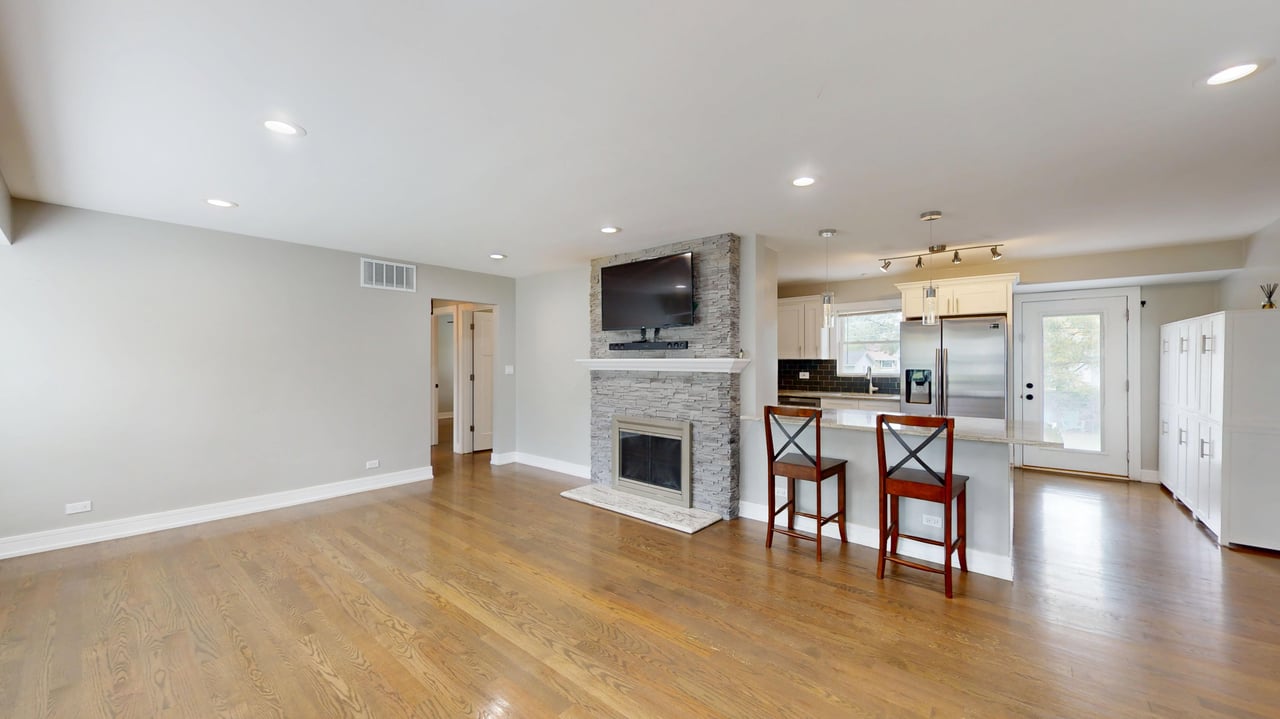
If you're searching for homes for sale in Downers Grove, Illinois, and hoping to find a move-in-ready home with modern updates, comfortable living spaces, and a conven… Read more

Community News
If you’re looking for a little Halloween excitement this fall, you don’t have to drive into the city or spend a fortune at a haunted attraction. One of Woodridge’s fav… Read more
Home Seller Information
There’s a reason Woodridge has remained on the radar of suburban Chicago homebuyers for decades.
WSP Listings
There are homes that look good in photos, and then there are homes that make sense the moment you walk through the door. 3936 Highland Avenue in Downers Grove is one o… Read more
Home Seller Information
If you’ve lived in Westmont for a while, you know there’s something a little different about this town.
Home Seller Information
If you’ve been watching the real estate headlines lately, you’ve probably noticed something: the housing market isn’t as simple as “it’s a seller’s market” or “buyers … Read more
We pride ourselves in providing personalized solutions that bring our clients closer to their dream properties and enhance their long-term wealth. Contact us today to discuss all your real estate needs!