Chicago To Suburbs: Lifestyle Changes To Expect
June 11, 2026
June 11, 2026
Wondering what really changes when you trade Chicago city life for the suburbs? The answer is not just square footage or a longer driveway. Your day-to-day routine, commute style, weekend plans, and even the way you run errands can all feel different. If you are considering a move to Chicago’s western or southwestern suburbs, this guide will help you understand what to expect and how to prepare for the shift. Let’s dive in.
One of the first changes you are likely to notice is lower density. Chicago has 12,059.8 people per square mile, while communities like Westmont, Clarendon Hills, Darien, and Woodridge range from 3,541.5 to 4,881.9 people per square mile. That usually means a less compact feel from the moment you arrive.
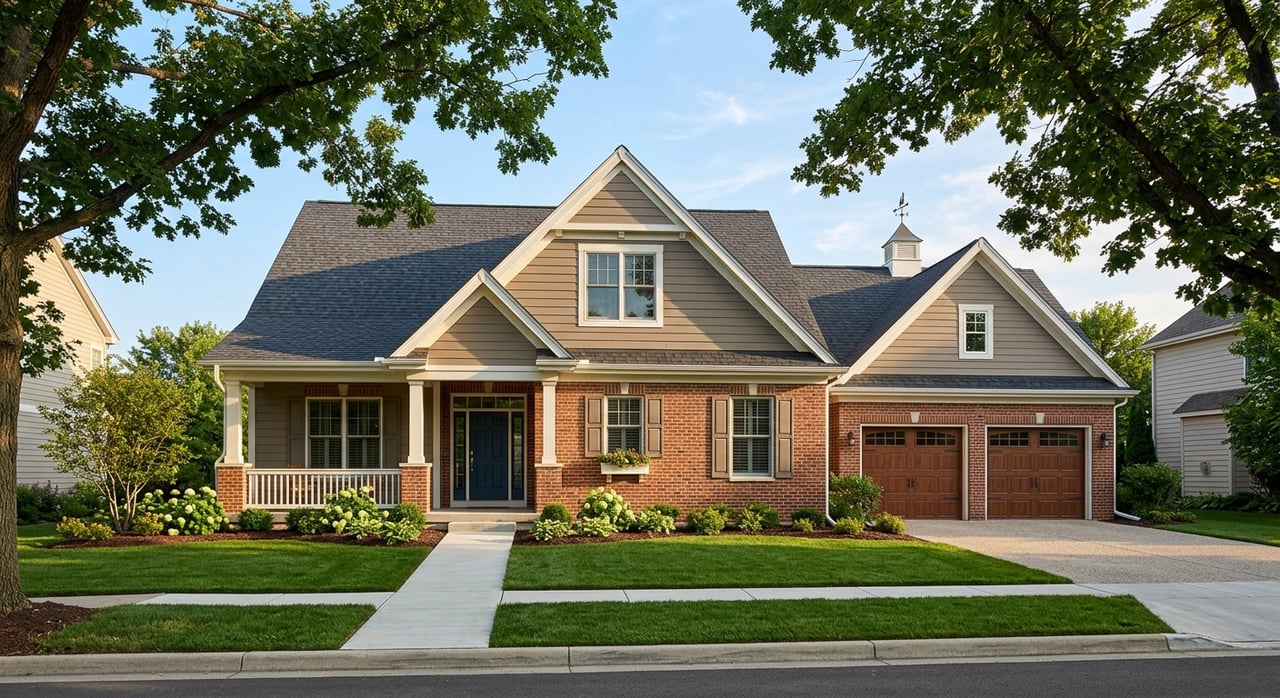
In practical terms, suburban living often gives you more breathing room between homes, more parking, and more storage. Daily life can feel less building-to-building and more home-centered. If you are used to having everything tightly packed around you, this may feel refreshing, quiet, or simply different at first.
The western suburban corridor also tends to be more owner-occupied than Chicago. Chicago’s owner-occupancy rate is 46.0%, compared with 55.1% in Westmont, 84.2% in Clarendon Hills, 78.8% in Darien, and 68.0% in Woodridge. That does not define every block or every housing choice, but it does help explain why many suburban areas feel more rooted in home-based routines.
You may find yourself thinking more about garage space, storage, yard maintenance, and how you want your home to function day to day. That is especially true if you are moving from a condo or apartment where shared amenities handled some of those needs. In the suburbs, your home often plays a bigger role in how you work, relax, host, and organize your week.
A move to the suburbs does not always mean a dramatically longer commute. Chicago’s mean travel time to work is 33.1 minutes, while Westmont is 26.6 minutes, Clarendon Hills is 28.9 minutes, Darien is 28.7 minutes, and Woodridge is 29.8 minutes. The bigger change is usually not the number of minutes. It is the way you travel.
In many western suburbs, commuting becomes more rail-plus-car than transit-on-every-corner. You may drive to a Metra station, park, and then ride into the city. Or you may rely more on major road corridors for part or all of your trip.
For buyers who want to keep city access in reach, the BNSF Line is a key part of the picture. Metra’s BNSF Line serves Clarendon Hills, Westmont, Downers Grove Main Street, Fairview Avenue, and other western suburban stops. Station parking is built into the system, with 875 spaces at Downers Grove Main Street, 512 at Westmont, 335 at Clarendon Hills, and 281 at Fairview Avenue.
That parking capacity tells you something important about suburban life. Unlike much of Chicago, where transit may feel embedded into the block-by-block experience, suburban commuting often depends on access points and planning. You are not just catching a train. You are coordinating how to get to the train.
Road access also plays a major role. The Illinois Tollway map includes I-88 and I-355, which reinforces how central driving remains in this part of the metro area. Even if you still use transit, you are likely to think more in terms of corridors, routes, and timing.
This is one of the biggest lifestyle adjustments for former city residents. In Chicago, it can be easy to make quick, frequent stops because services and shops are often nearby. In the suburbs, transportation can feel more coordinated and less spontaneous.
Pace serves 274 municipalities across 3,677 square miles, and that scale helps explain the experience. Suburban transit is useful, but it is more corridor-based. That often means you will plan errands in batches, combine stops into one drive, and pay closer attention to parking and travel times.
For many households, this becomes the most noticeable daily change. You may spend less time deciding whether something is nearby and more time deciding when to do three things in one trip. Once you adjust, that rhythm can feel efficient, but it is definitely different from city life.
The good news is that suburban life is not about having less to do. It is about doing different things closer to home. In DuPage County, forest preserves offer more than 175 miles of trails, giving residents easy access to outdoor recreation across the region.
In and around Downers Grove, Maple Grove offers trails and picnicking, while Hidden Lake offers trails, fishing, boating, and picnic areas. That means your weekends may shift from city-based plans to more local routines built around parks, preserves, and community amenities.
Woodridge adds another layer to that lifestyle. The Woodridge Park District and Village of Woodridge maintain more than 21 miles of off-road bikeways that connect to regional bikeways. The district also serves about 35,500 residents, offers more than 1,000 programs each year, and maintains 40 parks and open-space sites totaling 685 acres.
If you are moving from Chicago, this can feel like a real tradeoff in the best sense. You may make fewer casual trips into the city on weekends, but you may gain easier access to trails, bike routes, and local recreation closer to home.
Not all suburbs feel the same, even when they share train access or similar commute times. The western and southwestern corridor includes communities with distinct patterns in density, housing, and daily pace. That is why it helps to look beyond the general idea of “the suburbs.”
Clarendon Hills has 8,702 residents, a density of 4,807.7 people per square mile, an 84.2% owner-occupancy rate, and a 28.9-minute mean commute. Based on those numbers and its BNSF access, it reads as compact and station-oriented. If you want a suburban setting that still feels relatively connected around rail access, this is one example of that profile.
Westmont has 24,429 residents, a density of 4,881.9 people per square mile, a 55.1% owner-occupancy rate, and a 26.6-minute mean commute. Compared with some nearby communities, it shows a more mixed housing tenure profile. For some buyers, that can signal a more varied residential environment while still offering strong corridor access.
Darien has 22,011 residents, a density of 3,566.8 people per square mile, a 78.8% owner-occupancy rate, and a 28.7-minute mean commute. That combination suggests a more settled suburban profile. If your goal is a quieter, more home-centered routine, Darien may align with that type of lifestyle shift.
Woodridge has 34,158 residents, a density of 3,541.5 people per square mile, a 68.0% owner-occupancy rate, and a 29.8-minute mean commute. Its recreation network stands out, especially with more than 21 miles of off-road bikeways connected to regional trails. For buyers who want outdoor access to be part of regular life, Woodridge offers a strong example.
Downers Grove stands out as a rail hub in this area, with BNSF stations at Main Street and Fairview Avenue. Main Street alone has 875 parking spaces, which shows how significant train access is to the village’s daily flow. Nearby outdoor assets like Maple Grove and Hidden Lake also support a balanced suburban routine with both commuting infrastructure and local recreation.
For many Chicago buyers, the move to the suburbs is a trade. You often give up walk-up density and block-level convenience, but you gain more space, more parking, and a more home-centered routine. You may also gain easier access to trails, preserves, and local recreation that become part of everyday life rather than a special outing.
The key is choosing the right fit for your routine. If train access matters most, one community may stand out. If you care more about recreation, home-centered living, or a different pace, another may feel like a better match.
That is where local guidance matters. When you understand how each suburb actually lives day to day, it becomes much easier to decide where you will feel most at home. If you are weighing a move from Chicago to the western suburbs, Wenzel Select Properties can help you compare communities, clarify your priorities, and make a confident next move.
Stay up to date on the latest real estate trends.
Community News
Downtown Downers Grove has long been one of the most vibrant and walkable downtown districts in the western suburbs, offering a mix of locally owned restaurants, bouti… Read more
Home Buyer Information
Buying your first home is an exciting milestone, but it can also feel overwhelming. Between saving for a down payment, qualifying for a mortgage, and understanding the… Read more

Community News
There is nothing quite like celebrating the Fourth of July in Chicago's western suburbs. From hometown parades and live music to food festivals and spectacular firewor… Read more
We pride ourselves in providing personalized solutions that bring our clients closer to their dream properties and enhance their long-term wealth. Contact us today to discuss all your real estate needs!